Memews About
science

πŸ”¬ New platform connects molecule clusters to brain disorders

Researchers have developed a new screening platform that successfully links specific molecule clusters to neurodevelopmental disorders. This breakthrough was achieved by a team working at a major research institution. The platform analyzed data from over 500 patient samples collected between January 2022 and March 2023. This research offers new insights into the underlying biological mechanisms of these complex conditions. Future studies will use this tool to develop targeted therapies for affected individuals. πŸ”¬

#Neuroscience#MedTech#BrainHealth
science

🌌 JWST spots merging early black holes πŸ”­

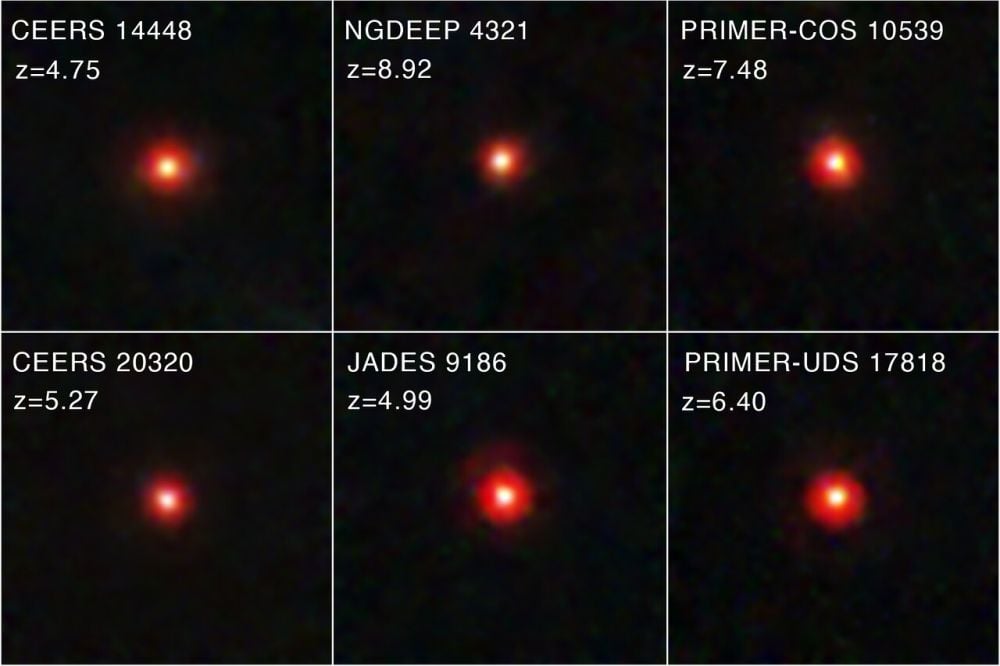
Astronomers found evidence suggesting "Little Red Dots" (LRDs) are early black holes merging to become supermassive black holes (SMBHs). The research, led by Takumi Tanaka at The University of Tokyo Kavli Institute for the Physics and Mathematics of the Universe, published in Publications of the Astronomical Society of Japan. They identified four dual LRD candidates in the COSMOS-Web survey with separations of 0.2-1.2 arcseconds. This points towards LRDs being pre-merger SMBHs, fueling their rapid early growth. More large field surveys are needed to expand this small, crucial sample.

#JWST#BlackHoles#Astrophysics
science

πŸ”¬ Oxygen-generating gel boosts cancer vaccine immunity

Recent clinical trials showed mixed results for cancer vaccines, while a new preclinical study offers a solution. Researchers at Northeastern University developed Click O2-CryogelVAX, an injectable scaffold that delivers antigen and generates local oxygen. This biomaterial successfully generated antitumor immunity and slowed prostate cancer growth in a mouse model. The oxygen generation reduced hypoxic infiltration, creating a better environment for immune cells to function. This suggests that vaccine success depends on more than just selecting good antigens. πŸ”¬

#CancerResearch#Biotech#Immunity
science

πŸ”¬ Time crystals boost quantum sensor precision by N cubed

Researchers from multiple universities demonstrated that quantum sensor precision improves drastically by scaling with the cube of the system size. This study, involving institutions in Italy, the UAE, and China, showed cubic scaling, $f_{global} \sim N^3$, in boundary time crystals. This research investigates quantum-enhanced parameter estimation using dissipative time crystals under continuous monitoring. The transverse collective dephasing model proved highly robust, maintaining super-classical scaling even with inefficient detection. This opens a promising path toward building larger and significantly more sensitive quantum devices. πŸ”¬

#QuantumPhysics#TimeCrystals#QuantumMetrology
science

🧬 Fungal 'Starships' Drive Gene Swaps Across Species

Giant fungal Starship transposons are enabling the horizontal transfer of smaller adaptive genes between different species. A survey of 1,348 fungal genomes revealed at least 5,906 independent transfer events across the kingdom. Horizontally derived TEs make up an average of 7.7%, reaching up to 67% of fungal TE content. This gene transfer is especially common in the Mucoromycotina subphylum and specific classes of Pezizomycotina. Future research will explore how these mechanisms shape rapid genome evolution in fungi.

#FungiScience#GeneTransfer#Microbiology
science

πŸ”¬ AI designs 3D molecules from text prompts

Researchers introduced TDmol, a new Text-guided De novo 3D molecule generation approach using a multimodal diffusion model. This system was developed by scientists at Shanghai Jiao Tong University to tackle drug discovery challenges like antibiotic resistance. The model achieves controllable 3D molecule generation by aligning text descriptions with molecular structures. Experimental results show TDmol significantly enhances the creation of valid and reliable 3D molecular structures. A user-friendly webserver for TDmol has been made available for academic use. πŸ”¬

#AIMedicine#ChemTech#DiffusionModel
science

πŸ”¬ Yeast's Cbr1 gene controls nutrient usage

Researchers discovered that the carbohydrate utilization regulator Cbr1 helps coordinate nutrient-specific gene activation in a basidiomycete yeast. This happened in the basidiomycete yeast Rhodotorula (Rhodosporidium) toruloides. The study detailed that Cbr1 inhibits glucose-mediated repression of disaccharide and proline utilization, and it was required for several other carbon sources. This suggests the yeast might encounter these various carbon sources together during complex microbial interactions in nature. This mechanism provides a new way fungi build their nutrient sensing transcriptional networks.

#Microbiology#YeastResearch#FungiScience
science

🐸 Wildlife experts survey amphibians and reptiles in Munnar

A big amphibian and reptile survey is taking place in the Munnar Wildlife Division from September 3 to 6. Sixty experts and volunteers, along with Forest department staff, are participating across several National Parks and the Kurinjimala Sanctuary. The 2022 survey documented 52 amphibian and 47 reptile species in the area. This current effort aims to gather deeper ecological data, including species abundance and habitat changes. The survey is a joint project between the Munnar Wildlife Division and the Aranyakam Nature Foundation. 🐸

#MunnarWildlife#WildlifeSurvey#Biodiversity
science

🦟 Mining data to fight malaria in Amazon 🦟

Researchers found a direct link between illegal mining and malaria cases in the Yanomami Indigenous Territory in Brazil. The study focused on the area, where the issue was prominent under Jair Bolsonaro’s government from January 2019 to 2022. A 1% increase in mined area was linked to a 24% rise in monthly malaria cases. Currently, scientists are building an alert system using mining and deforestation data to warn health agents. This system aims to help eliminate malaria in Brazil by predicting outbreaks early.

#AmazonHealth#MalariaAlert#BrazilScience
science

πŸš€ Roman Space Telescope successfully launches into space

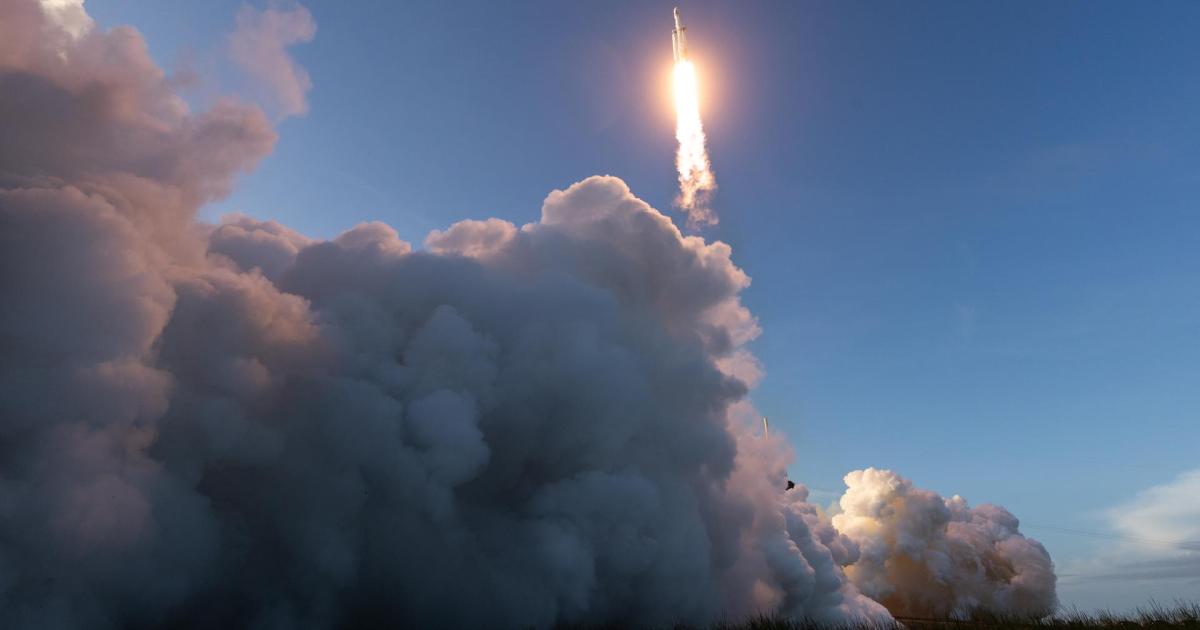
The Nancy Grace Roman Space Telescope successfully launched from NASA's Kennedy Space Center in Florida on August 30 at 7:26 a.m. EDT. A SpaceX Falcon Heavy rocket carried the observatory to the second Sun-Earth Lagrange point, L2, where it will orbit the Sun synchronized with Earth. The $4.3-billion telescope will spend three months in transit before starting its mission to study dark energy and exoplanets. It is equipped with instruments allowing for 300-megapixel images and direct planet imaging. This mission aims to map the sky and hunt thousands of new exoplanets over its five-year span. πŸ”­

#SpaceMission#NASA#RomanTelescope

j / k or ↑ ↓ to move Β· space for next

Preview of the card that will be shared